Collagen Protein vs Whey Protein: What’s the Difference (and Do You Need Both?)
This article contains affiliate links, which means I may earn a small commission if you choose to purchase through my links. As always, all opinions are my own.

Standing in the supplement aisle wondering which protein is right for you?
Protein powders. Collagen peptides. Gummies. Bars. Shakes. If you’ve ever found yourself wondering whether you should be taking collagen protein or whey protein, you’re not alone.
At first glance they seem similar—both contain protein and both are marketed as part of a healthy lifestyle—but they actually serve different purposes in the body.
As someone who enjoys strength training and is always looking for realistic ways to support my health, I’ve spent a lot of time learning about protein. But as a busy mom, I’ve also learned something equally important:
The best wellness habit isn’t always the “perfect” one—it’s the one you’ll actually stick with.
That’s one of the reasons I was intrigued when I discovered VitaTein, a protein gummy that combines whey protein, marine collagen and skin-supporting vitamins into one convenient snack.
Before we talk about why I like it, let’s start with the basics.

What Is Whey Protein?
Whey protein is one of the most researched protein supplements available. It’s derived from milk during the cheese-making process and contains all nine essential amino acids, making it a complete protein.
Because it contains a high amount of leucine—an amino acid that plays an important role in muscle protein synthesis—whey protein is often recommended after resistance training to support muscle recovery and growth.
People commonly choose whey protein if their goals include:
- Building muscle
- Recovering after workouts
- Increasing daily protein intake
- Supporting strength training
What Is Collagen Protein?
Collagen is the most abundant protein in the human body and found in skin, joints, bones, tendons and connective tissue. Collagen is perhaps best known as an essential building block of skin that depletes as we age – leading to lines, wrinkles, and loss of elasticity. Most topical anti-aging skincare products work to offset this loss by stimulating collagen production. There are additional benefits when collagen is used as supplement, including strengthening of hair & nails, improving joint health and providing deeper, more structural skin support.
Unlike whey protein, collagen is considered an incomplete protein because it does not contain all nine essential amino acids.
That doesn’t make it “bad” protein—it simply means it serves a different purpose.
Many people take collagen to support:
- Skin elasticity
- Hair and nail health
- Joint health
- Healthy aging
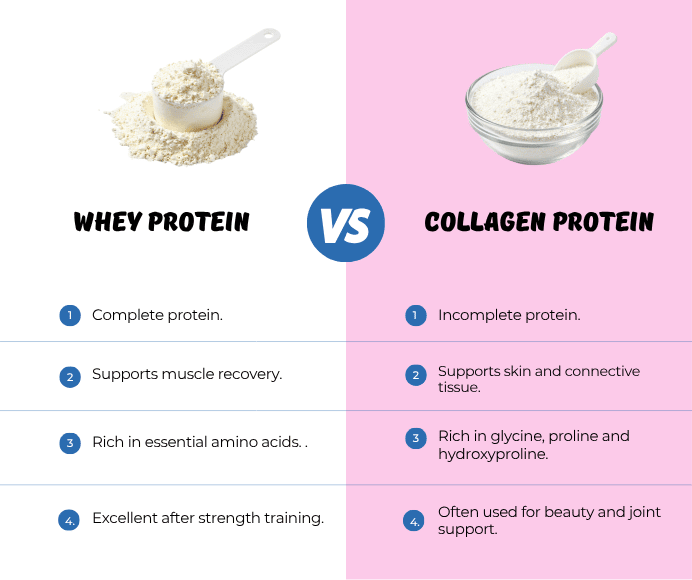
Collagen Protein vs Whey Protein: What’s the Biggest Difference?
The biggest difference comes down to what you’re hoping to achieve.
| Whey Protein | Collagen Protein |
|---|---|
| Complete protein | Incomplete protein |
| Supports muscle recovery | Supports skin and connective tissue |
| Rich in essential amino acids | Rich in glycine, proline and hydroxyproline |
| Excellent after strength training | Often used for beauty and joint support |
Instead of asking which one is better, I think a better question is:
Better for what?
If you’re focused on maximizing muscle growth, whey protein has an advantage.
If your priorities include skin, hair, nails or joint support, collagen brings unique benefits that whey doesn’t.
Can You Take Whey Protein and Collagen Together?
Yes. In fact, because they serve different functions, many people choose to include both in their routine.
This is exactly why VitaTein caught my attention. Instead of asking me to choose between collagen and whey, it combines both into a portable protein gummy.
Each serving contains 24 grams of protein and includes a combination of whey protein, marine collagen, and skin-supporting nutrients designed to deliver multiple benefits in one convenient snack. For me, that means one less supplement to think about.

What Makes VitaTein Different?
Here’s what you’ll find in one serving:
| Nutrient | Why It Matters |
|---|---|
| 24g Protein | Supports daily protein intake and muscle recovery. The protein comes from a combination of whey protein and marine collagen. |
| 10g of Whey Protein | Helps build muscle and support recovery after exercise |
| 14g Marine Collagen | Provides collagen peptides that support healthy skin, hair, nails, and joints. |
| Vitamin C | Antioxidant that helps support your body’s natural collagen production. |
| Vitamin A | Promotes cell turnover and aides in your body’s natural production of collagen |
| Biotin | Supports healthy hair, skin, and nails. |
| Other skin-supporting vitamins | Designed to complement the collagen blend. |
| 110 calories | Makes an easy afternoon snack or post-workout option. |
What I appreciate most is that I don’t have to think about taking multiple supplements throughout the day. Instead of remembering collagen powder, a protein shake, and separate beauty vitamins, I can grab one serving that combines them all.
Why Protein Gummies Work for My Lifestyle
Here’s the honest truth. I know I should eat enough protein. The challenge isn’t knowing. It’s remembering.
Between work, school pickup, sports practices and trying to keep everyone else fed, I’m much more likely to reach for something that’s already in my purse than prepare the “perfect” snack.
That’s why I’ve genuinely enjoyed VitaTein. Not because I think gummies replace whole foods. But because they’re:
- Portable
- Convenient
- Delicious (seriously, my entire family loves them)
- A satisfying afternoon pick-me-up
- An evening sweet treat that doesn’t leave me feeling guilty
They’re one of those rare wellness habits that actually fit into real life.

Are Protein Gummies Worth It?
If you’re looking for the highest amount of protein possible after a heavy lifting session, a traditional protein shake may still be your best option.
But if your goal is finding an easy, enjoyable way to add protein to your day while also supporting skin health, protein gummies can be a great addition to your routine.
For me, consistency matters more than perfection. I’d rather have a protein snack I actually remember to eat than a protein powder sitting untouched in my pantry.
Final Thoughts
When it comes to collagen protein vs whey protein, there isn’t one universal winner. They simply do different jobs. Whey protein shines when it comes to muscle recovery and meeting protein needs after exercise. Collagen offers unique benefits for skin and connective tissue.
And if you’re looking for a convenient option that combines both, VitaTein offers a unique approach that fits seamlessly into a busy lifestyle. After trying them myself (and hiding them from my kids because they loved them so much!), I can honestly say they’ve earned a permanent spot in my purse (and in my car!).
If you’re curious to try them yourself, you can use my code NATALIE for 41% off your first order.
Don’t Move a Muscle – Let’s Stay in Touch
Learn more about popular fitness & wellness related topics + enjoy a weekly fitness events listing!