Pelvic Floor Exam & Pelvic Rehab Explained

Nearly 1 in 3 women experience bladder leakage while exercising—and I was one of them. Leakage might be common, but it’s not normal. If you’ve ever wondered whether pelvic floor rehab could help or felt nervous about what actually happens during a pelvic floor exam, you’re in the right place. I’m sharing my personal experience with pelvic rehab—what to expect, how it works, and why every active woman should know about it. But first, let’s start with some basics.
What is the Pelvic Floor?
The pelvic floor is a group of muscles and connective tissues that support your pelvic organs including the bladder, urethra, bowl, rectum, anus, vagina (females) and prostate (men). Various life experiences (like childbirth) and health conditions & treatment (like cancer) and can cause these muscles to work improperly.
Signs You Have a Weak Pelvic Floor
If you are experiencing any of the symptoms below, you likely have a weak pelvic floor and are a candidate for pelvic floor rehab.
- Bladder leakage of any kind
- Pain with intercourse and sexual activity
- Frequent bathroom visits. (i.e. peeing before every workout to avoid leaking)
- Lower back or hip pain
- Diastasis Recti aka Abdominal Separation
- Sensation of heaviness or fullness in your pelvic area
- Weak core muscles no matter how much abdominal work you do

What is Pelvic Rehab?
Pelvic rehab is physical therapy to strengthen and/or relax the muscles of the pelvic floor. You will work one-on-one with a pelvic floor physical therapist to improve any symptoms of pelvic floor dysfunction, including a weak pelvic floor. It’s a minimally invasive way to regain control of a leaky bladder.
Pelvic floor rehab not only seeks to activate the deep core pelvic muscles, but also nearby muscle groups that engage the pelvic floor — including the core, hips, thighs and buttocks. The duration of your pelvic floor rehab will vary, but generally patients should expect to see improvements in 3-4 months’ time.
When Should You Seek Pelvic Floor Rehab?
Dr. Jamie Kocher, a leading specialist in women’s health & fitness and a pelvic floor physical therapist, believes “the ideal time for a woman to seek a pelvic floor specialist is 3-4 weeks post-partum”. She goes on to explain, “this is regardless of if they had c-section, vaginal delivery, complicated or uncomplicated birth. There are so many changes that happen to your body during pregnancy & delivery that the natural healing process can only take you so far. It’s important to recover the right way, for long term pelvic health and comfort.” Kocher noted that it’s never too early or too late to work with a pelvic floor physical therapist and that she sometimes sees women who are still pregnant.
What Can You Expect From A Pelvic Floor Exam & Evaluation?
An initial appointment with a pelvic floor physical therapist should begin with a conversation about your symptoms and medical history. Depending on your symptoms, they may want to do a movement or impact screening and watch how you perform specific exercises that cause leaking and offer tips (ie jumping squats, high knees).
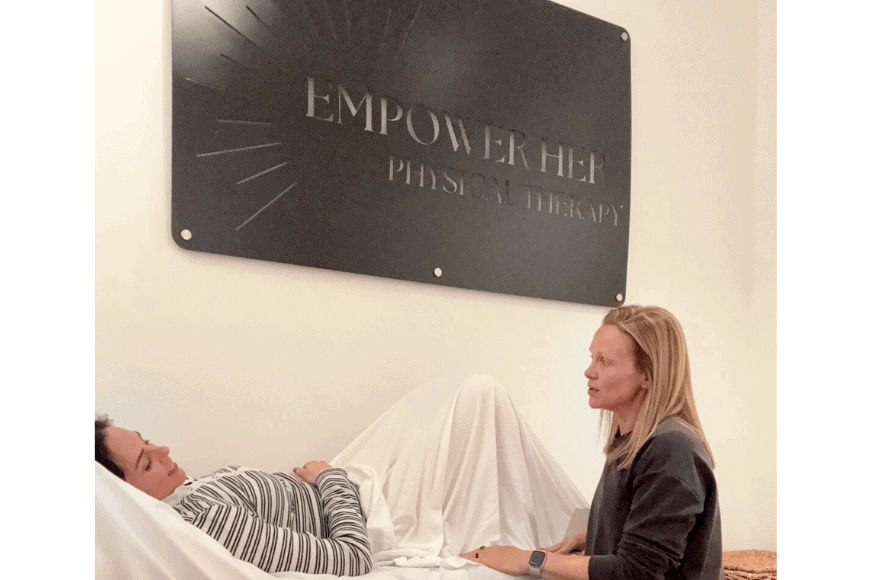
After your consultation, your physical therapist will perform a visual & physical evaluation of abdominal and pelvic floor muscles. They should proceed only if you’re comfortable and with permission. The exam is similar to a gynecological exam but without the stirrups and with a different goal. You will remove lower garments in exchange for a paper robe and lie on an exam table.
During the exam, your pelvic floor specialist will watch how your abdominal and pelvic muscles engage when contracting your core & pelvic muscles. They will use a gloved finger(s) to evaluate how you kegal & engage your core, noting areas of weakness, tightness or pain. This will help them identify where the pelvic dysfunction is coming from.
After the exams, your physical therapist should review & demonstrate the at-home exercises aimed at improving your pelvic dysfunction. The goal of these exercises will be to strengthen & repair your pelvic floor. You should expect to do these exercises several times a week. Your initial appointment lasts approximately 1 hour, while follow-up appointments may be shorter.
What Is a Kegel and Why Are They Important?
A Kegel is a pelvic floor contraction that squeezes and lifts of your vaginal and rectal muscles. You essentially pull up and in as if you were trying to stop the flow of urine. As mentioned earlier, Kegels are used to assess the function of your pelvic floor and are one of many exercises that can help strengthen a weak pelvic floor, but they are not recommended for all types of pelvic floor dysfunction. After childbirth, women often need to retrain their bodies to Kegel naturally when doing other movements. This essentially creates a connection from the pelvic floor to your upper abdominals & prevents leaking.
Natalie’s Personal Experience with Pelvic Floor Rehab
As a fitness enthusiast and mom of 3, I was unfortunately part of the 1 in 3 statistic of women who experience bladder leakage with exercise. Specifically, I’ve noticed leaking after high impact exercises like jumping rope or the occasional powerful cough or sneeze. Even though it’s been 6 years since I gave birth to my twins, I realized this was not normal. I never received proper education or support after childbirth in this arena & I was tired of living in fear of the occasional bladder leak. It was time for me to prioritize myself and seek help from a professional.
Dr. Jamie Kocher had been referred to me by a few friends, so I scheduled my first appointment. Dr. Jamie has a private office inside of a women’s gym in Ellisville, MO so I felt comfortable knowing no one could see or hear me. She was very professional from the start, communicating what would happen during the exam and asking for permission before proceeding.
During and after the exam, Dr. Jamie offered a number of tips to immediately prevent leakage. Then, she reviewed the exercises I should work on from home to strengthen my core & pelvic region. After the visit, she emailed me a copy of my personalized plan with 3 exercises to do 3x each week from home. They included a link to a YouTube video demonstrating each move as a refresher, which made it really easy.
I have seen Dr. Jamie for 3 visits over the course of 3 months & am pleased with my progress. My most valuable takeaway so far is understanding how to connect & engage my pelvic floor in my daily life – when walking, standing or doing any type of exercise. She has given me so much awareness about my pelvic region. Her advice has completely changed how I think about & engage my abs and I feel so empowered by her expertise. I’ve noticed less leakage with high impact exercises & surprise movements. While I am still extremely mindful about engaging the pelvic floor, I know that with continued work my body will connect these muscles without so much thought. If you are experiencing any type of pelvic floor dysfunction, don’t hesitate to reach out to Dr Jamie.
Tips To Control Leakage from Dr Jamie Kocher
Here are some of the key things I’ve learned since working one-on-one with pelvic floor physical therapist, Dr. Jamie Kocher.
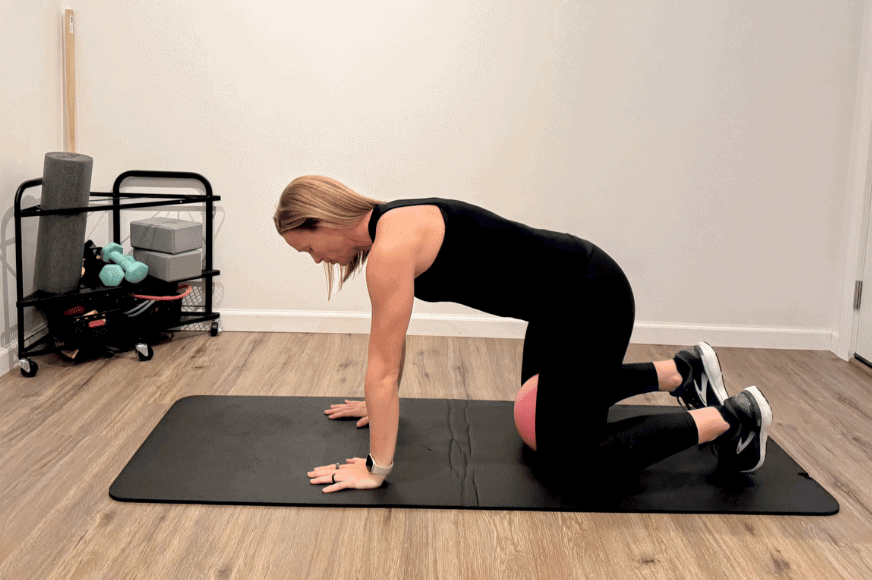
- Tighten your core from the bottom up – Learning how to properly engage my core was key. Often people do it wrong, tightening the upper abs first which pushes the lower abs down & puts more pressure on the pelvic floor. To gain more control over leaking, Dr. Jamie suggested taking a bottom up approach. This means starting with a Kegel then zipping and tightening your abs from the bottom to the top.
- Tilt forward when landing high impact jumping exercises – Leakage often occurs with high impact movements like high knees or jump squats. Rather than staying straight up on your landing, hinge slightly at the waist to minimize pressure on your pelvic region to prevent bladder leaks.
- “Squeeze when you sneeze” – With this tip, you are essentially retraining your brain & pelvic floor to do what it may have done naturally, prior to childbirth. Squeeze your pelvic floor (aka Kegel) before coughing, sneezing, jumping or any exercise that may cause leaking. It takes some practice, but eventually your brain/body connection will do this on its own.
- When lifting weights, exhale more – People often hold their breath at the peak of their lift, which creates pelvic floor pressure and possibly leakage. As you lift weights, fully exhale through the hard parts of your lifts to reduce pressure going down into your pelvic floor.
- Connect with your breath – Big belly breaths can activate your pelvic floor. Inhaling while will naturally push on the pelvic floor causing it to lengthen and stretch, exhaling is when your pelvic muscles will shorten. If you can retrain your brain to connect to your pelvic floor during breathing you will have more control over these muscles and prevent leaking.
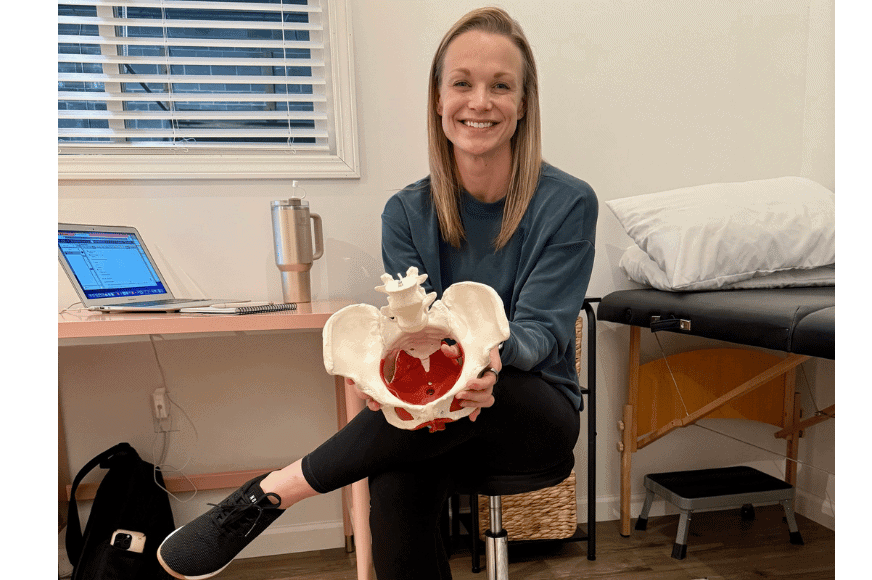
Dr. Jamie Kocher, DPT, Owner of Empower Her Physical Therapy
Dr. Jamie Kocher is the owner of Empower Her Physical Therapy in Ellisville, MO. She is a pelvic floor specialist and an expert in bladder issues, prolapse, back/hip/pelvic pain, pregnancy and postpartum issues, and fitness performance. Her mission is to helps women resolve pelvic floor symptoms, core issues, and pain in & out of the gym FOR GOOD. Empower Her Physical Therapy has a private treatment room inside CG Squad, a women’s gym at in Ellisville, MO.
Contact Dr. Jamie below to schedule your appointment:
16261 Westwoods Business Park, Ellisville, MO 63021
636-206-6114
Follow her on Instagram @dr.jamie.dpt

Final Thoughts
If you’ve been silently dealing with bladder leaks and chalked it up as something you just have to live with — please know that you’re not alone, and more importantly, you don’t have to. I waited years to seek help, and I now wish I had done it sooner. Pelvic floor rehab has given me confidence, awareness, and control over my body in ways I never imagined. Whether you’re newly postpartum or years past delivery—don’t be afraid to seek help & get your pelvic floor exam. You deserve to move, lift, cough, and live freely—without fear of leaking or pain.
Looking for more fitness & wellness related content? See more articles on The Blog.
Don’t Move a Muscle – Let’s Stay in Touch
Stay in-the-loop on the best fitness, food & wellness opportunities in St Louis by subscribing to the email list!